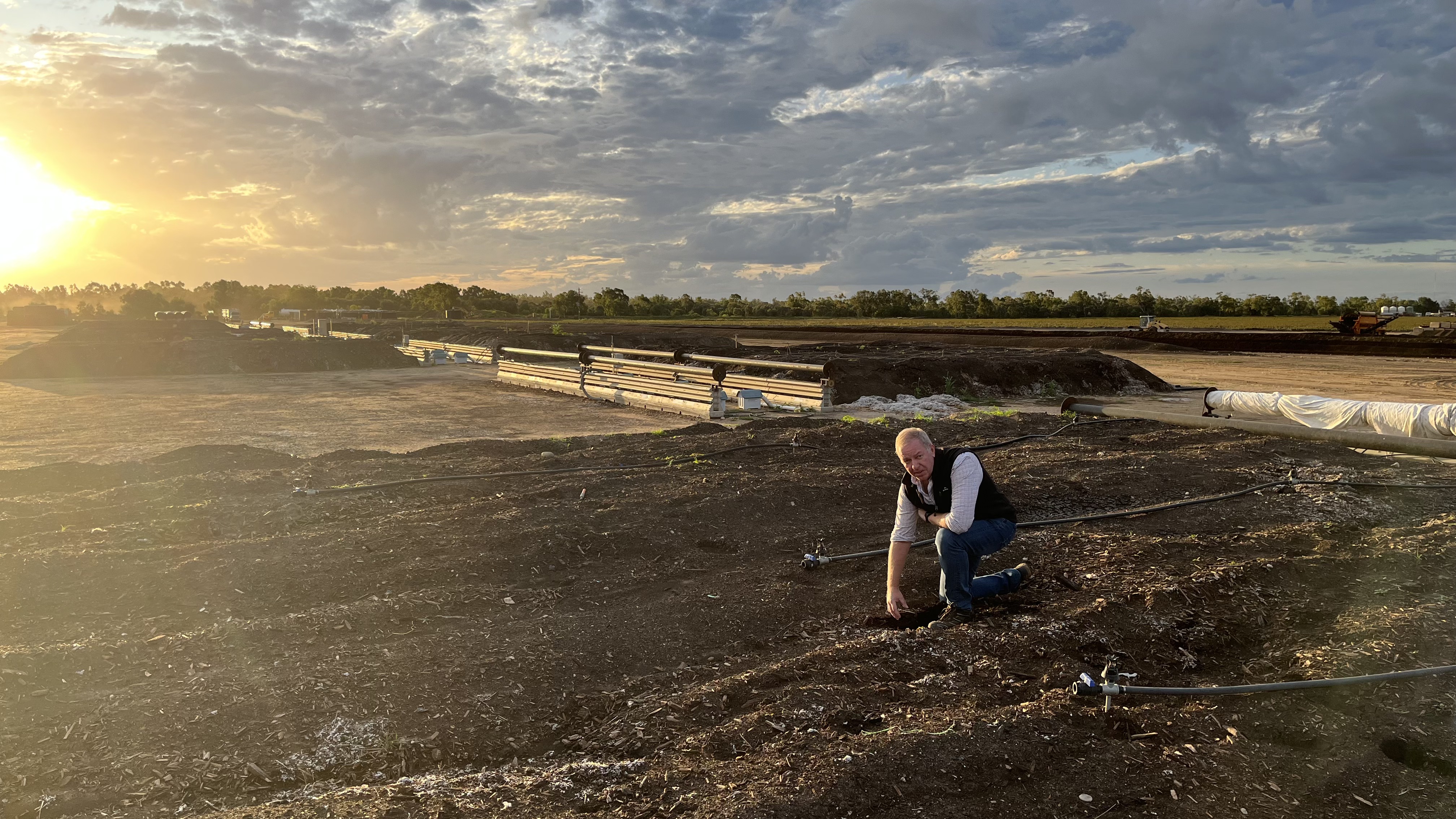
Martin Tower, Principal Adviser, Radicle Compost
Organics Recycling Advisory

Organic waste diversion mandates don't have to mean increased costs. Your challenges are unique to your situation — your solution should be too.

Radicle Compost works with regional councils and agricultural operations to find the most viable market for your organic waste first — then design the simplest, most cost-effective solution to get you there.

Tell Us About Your Situation How We Work

A Different Approach to Organic Waste

Typically, organic waste management models are designed for larger scale, higher capital operations with different circumstances and markets to regional facilities. Adopting them rarely works and often costs more than it should.

Radicle Compost takes a different approach. We start with your specific waste stream, find the most viable markets for what it can produce, and work backwards to the simplest operation that gets you there — whether you deliver it yourself or through a service partner. No borrowed playbook. No unnecessary capital. Just a model that fits your situation.

We don't sell a process and we don't sell a technology. We find your market first, then work backwards to whatever solution gets you there most cost-effectively.

Tell Us About Your Situation

Our Methodology

  1. 1
    Your Waste Stream
    What you have, in what volumes, with what characteristics
  2. 2
    Market Identification
    Who will buy what, at what price, and in what volumes
  3. 3
    Product Matching
    What your stream can most profitably produce for those markets
  4. 4
    Production Model
    The simplest, most cost-effective way to produce it — self-delivered or partnered
  5. 5
    Primed Markets
    Demand identified before capital is committed
  6. 6
    Ongoing Access to Expertise
    When you need it, we're there

What You Get

Four outcomes that make a material difference to the financial and operational case for organic waste diversion.

01

A market before a model

Demand confirmed before capital is committed. You know where the product goes before the slab is poured.

02

A solution built for your scale

Designed for regional circumstances, not adapted from a metropolitan model. Right-sized from day one.

03

Compliance met without cost blowout

Mandate satisfied at a cost ratepayers and boards can defend. No unnecessary capital, no overengineered solutions.

04

Capability you retain

Knowledge stays with the client, not the consultant. Your team understands the system and can manage it independently.

Our Services

Seven service offers covering the full project lifecycle — from initial waste stream audit through to long-term operational support. Engage us for a single service or combine multiple offers into a tailored package.

SO1

Input Audit & Concept Proposal

Comprehensive situation review — waste stream volumes, site suitability, conceptual layout, cost assessment, and end-market identification. The ideal starting point for any new composting project.

SO2

Construction Planning & Approvals

Coordinating technical experts, navigating government approvals and licensing, developing project budgets, and communicating milestones to your stakeholders and funding bodies.

SO3

Site Construction Project Support

Acting as your expert representative during construction — specifying equipment, negotiating contracts, and overseeing commissioning to ensure the built facility matches the design intent.

SO4

Operations Setup & Training

Standard operating procedures, staff training, quality control systems, and 12 months of troubleshooting and optimisation support as your operation matures.

SO5

Compost Marketing & Sales Strategy

Identifying target markets, developing value propositions, designing trial and demonstration sites, product development advice, and coaching your sales team to build internal capability.

SO6

Quality Testing & Certification

Sampling and testing protocols, interpreting laboratory results, navigating organic certification requirements, and ongoing monitoring to ensure consistent quality and customer confidence.

SO7

3-Year Contracted Expert Support

A long-term advisory partnership with retained access to Radicle Compost expertise across the full project lifecycle. Scheduled site visits, progress reviews, and a dedicated channel for ad-hoc support. Priced by negotiation.

Discuss Your Project

25 Years. Every Scale. Every Context.

Martin Tower has spent 25 years designing, building, and operating organic waste processing facilities across Australia — windrow, aerated floor, and tunnel systems across council, agricultural, and food processing sectors. That breadth of hands-on experience includes knowing what doesn't work, and where alternatives to composting are the more appropriate solution. It's what makes a genuine market-first approach possible: when you've seen every scale and every context, you stop defaulting to a favourite solution.

Lockyer Valley — proof of concept

A trial FOGO composting facility achieved certified product quality (AS4454) within a 12-week processing cycle — using an aerated floor system with contamination management protocols developed for the specific input stream. The model worked. The market was there. The challenge was capital for expansion — which is exactly the conversation our approach is designed to have before infrastructure is committed, not after.

Meet the Team

Industry Insights

Practical perspectives from 25 years at the sharp end of Australia's recycled organics industry.

Policy & Strategy

The FOGO Mandate: When Policy Outpaces Processing

Regional councils face a structural squeeze: FOGO mandates are outpacing the infrastructure to process it. Why the sequence of decisions matters more than the technology.

Read article →
Operations

Your Compost Pile Has a Mood Problem

Odour complaints don't just upset neighbours — they end facilities. Why odour is not an inevitable by-product of composting, but a symptom of process failure.

Read article →
Strategy

Build or Truck? The Decision That's Costing Councils Millions

The "trucking strategy" looks efficient on a spreadsheet — but it ignores four critical market tensions that could cost your region millions and seven local jobs.

Read article →
Contamination

The Plastic That Ate the Market

Soft plastics are the single biggest reason Australian compost can't be sold at a premium — and the problem starts at the kerb. Why the confetti effect is practically irreversible.

Read article →
View All Articles

Tell us about your situation

Every situation is different. Tell us about yours and we'll come back to you within 48 hours with an honest assessment of whether and how we can help.

Your information is used solely to respond to your enquiry. We don't share it with third parties.